Not sure where to start? Ask Gale.
Gale
Your Crosswind careers guide
Gale is an AI and can get things wrong. Check the employer's own page before you apply.
Crosswind Careers
October 31, 2026
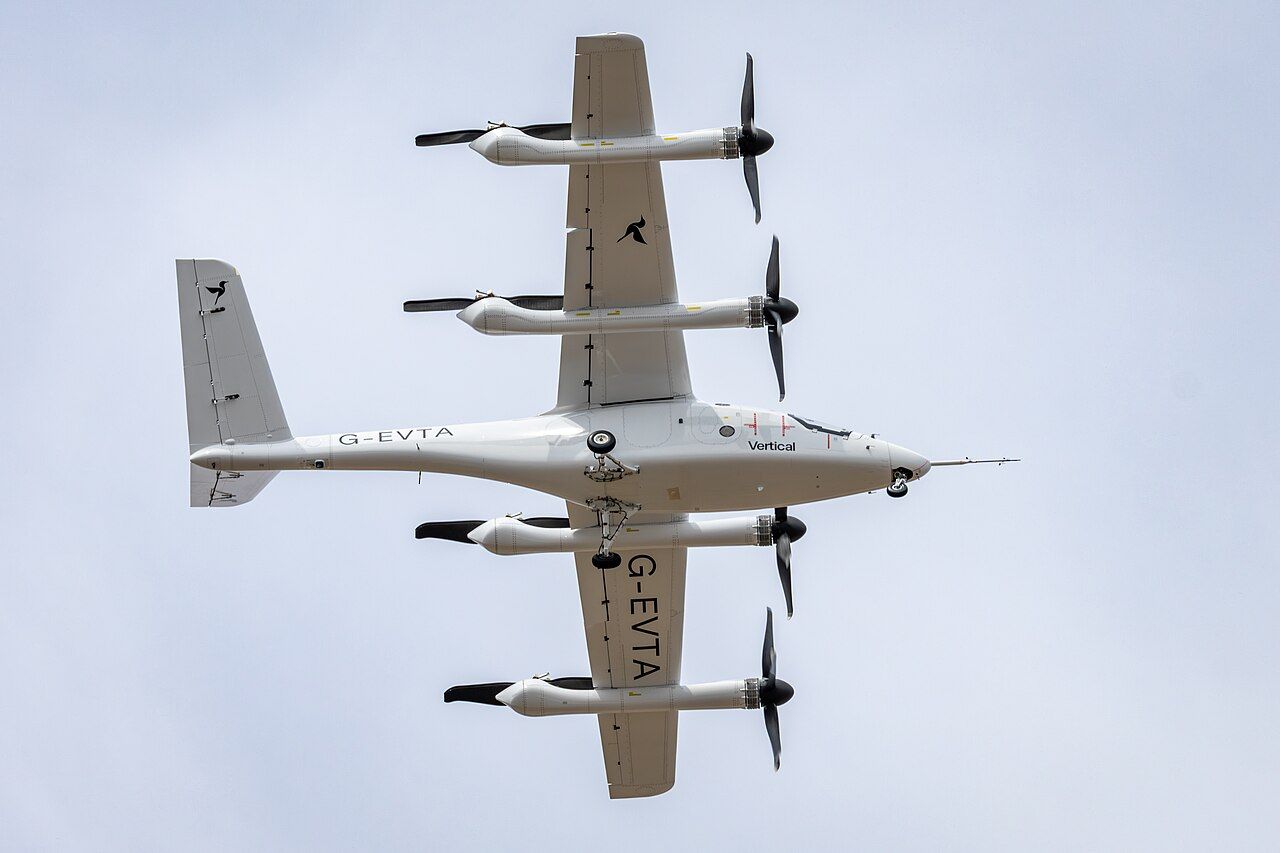
The headlines make eVTOL (electric vertical take-off and landing) aircraft look closer than they are. In July 2026 a UK-built prototype flew in front of crowds at the Farnborough Airshow. A few weeks earlier, the same company had pushed its certification target back by a year. Both facts matter if you are thinking about building a career around flying taxis. This guide separates what is real today from what is still promised, and says who is actually hiring.
What actually happened in 2026
The UK's most advanced eVTOL developer is Vertical Aerospace, headquartered in Bristol with flight testing at Kemble in Gloucestershire. Its 2026 so far:
14 April: the VX4 prototype completed a full two-way piloted transition at Kemble: vertical take-off, forward flight on its wings, then a vertical landing. Vertical says it is the second company in the world to do this in a full-scale tiltrotor eVTOL.
July: the VX4 flew publicly at Farnborough on five consecutive days, in front of more than 140,000 visitors according to the company.
13 July: Vertical moved the certification target for its production aircraft, the Valo, from 2028 to 2029. It said the new date reflects the rigour of certifying an entirely new class of aircraft.
13 August: Vertical reported about $134 million (£99 million) in cash and roughly $100 million of new financing commitments. It said this gives at least 12 months of runway, against expected cash outflows of about $150 million (£110 million) over the next year.
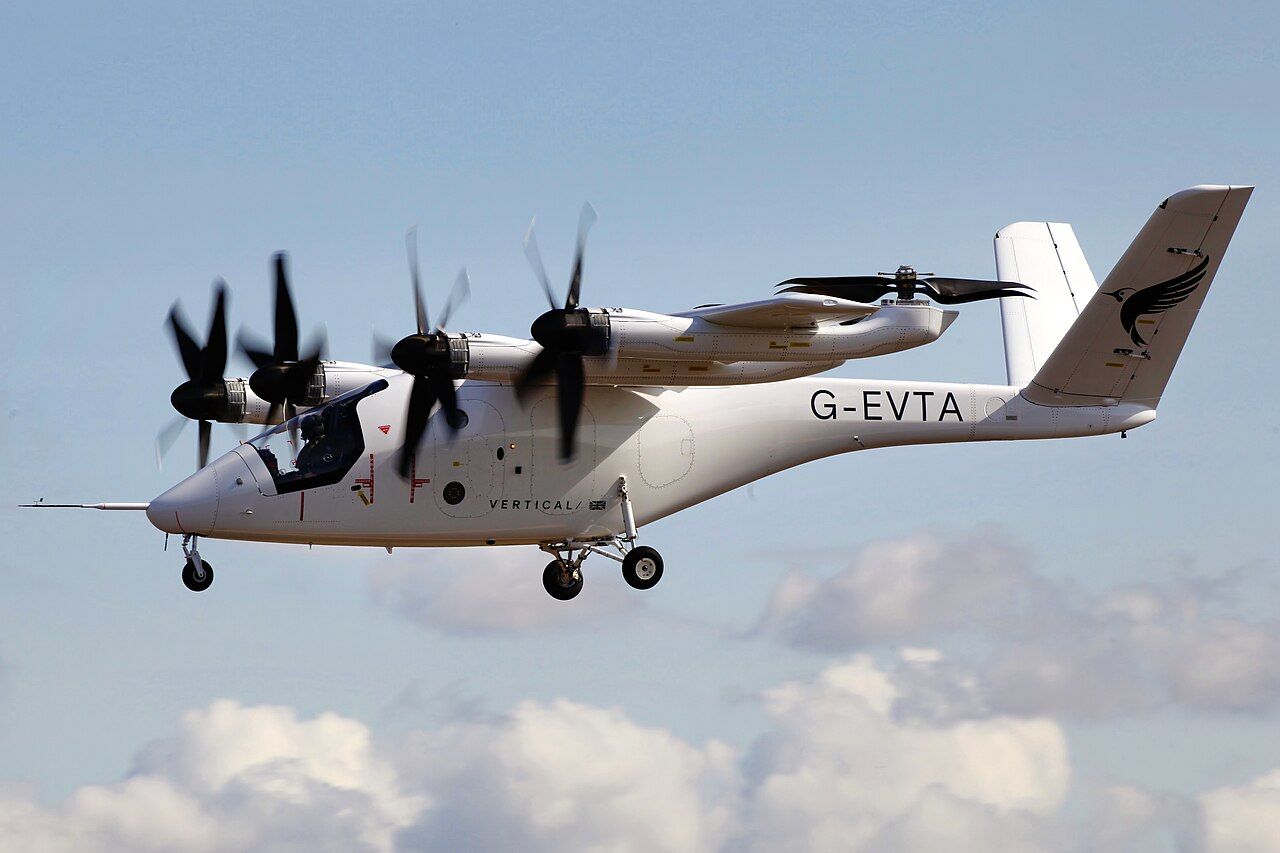
Vertical Aerospace’s VX4 prototype in flight at RAF Fairford, July 2025. Photo: Colin Cooke Photo, CC BY-SA 4.0, via Wikimedia Commons
Still to come: a critical design review by the end of 2026, an early aircraft production facility at Cotswold Airport (planned for the third quarter of 2026), and a hybrid-electric retrofit of its latest prototype in the first half of 2027.
The Civil Aviation Authority (CAA) says it is working towards the regulatory framework needed for initial commercial passenger flights from the end of 2028. Its main decisions so far, after a consultation that closed on 29 January 2026 with 28 responses:
New eVTOL aircraft will be classed as either Powered-Lift or Non-Conventional Helicopters.
Airworthiness will use the existing Part 21 framework, changed only where necessary.
Existing commercial pilots (CPL/ATPL holders) will get a pathway to a type rating on new VTOL aircraft. Private pilots will get a type rating pathway for non-commercial flying.
No ab-initio pilot training route is proposed at this stage.
More consultations on detailed policy and legislation are still to come, and the CAA has not published final dates for pilot licensing rules or vertiport regulations. It also expects a consultation on heliports, which would apply to vertiports, during 2026.
Vertical Aerospace described itself as having about 460 employees in a job listing from March 2026. We could not find published hiring targets. The 2026 listings we found are build-phase jobs: junior aircraft manufacturing engineer (Kemble), junior digital manufacturing engineer, junior stress engineer, aircraft mechanical technician, operations quality engineer and senior certification manager. Listings expire, so some of these will be closed by the time you read this.
The junior manufacturing engineer listing asked for a degree in engineering, manufacturing, operations, supply chain or a related field. CAD experience was helpful and CATIA was a plus. The listing said mindset mattered more than polish, and it did not state a salary.
What you will not find yet is a large market for flying-taxi pilots, vertiport operators or air traffic roles. Those jobs depend on certified aircraft and finished rules, and neither exists today.
Engineering students: this is the realistic entry point. The work is production, structures, quality and certification, and it is happening now. If you are graduating in 2027, you would be joining while the aircraft is still being proven, not while it is flying passengers.
Aspiring pilots: do not pay for eVTOL-specific training. The CAA's current approach converts existing commercial pilots through type ratings, and has not proposed a way in from scratch. Train through the normal commercial route and treat eVTOL as a possible later move.
Operations, ATC and management: vertiport design, rescue and firefighting rules and airspace integration are still being worked out by CAA working groups. Expect those jobs to follow the rules, not lead them.
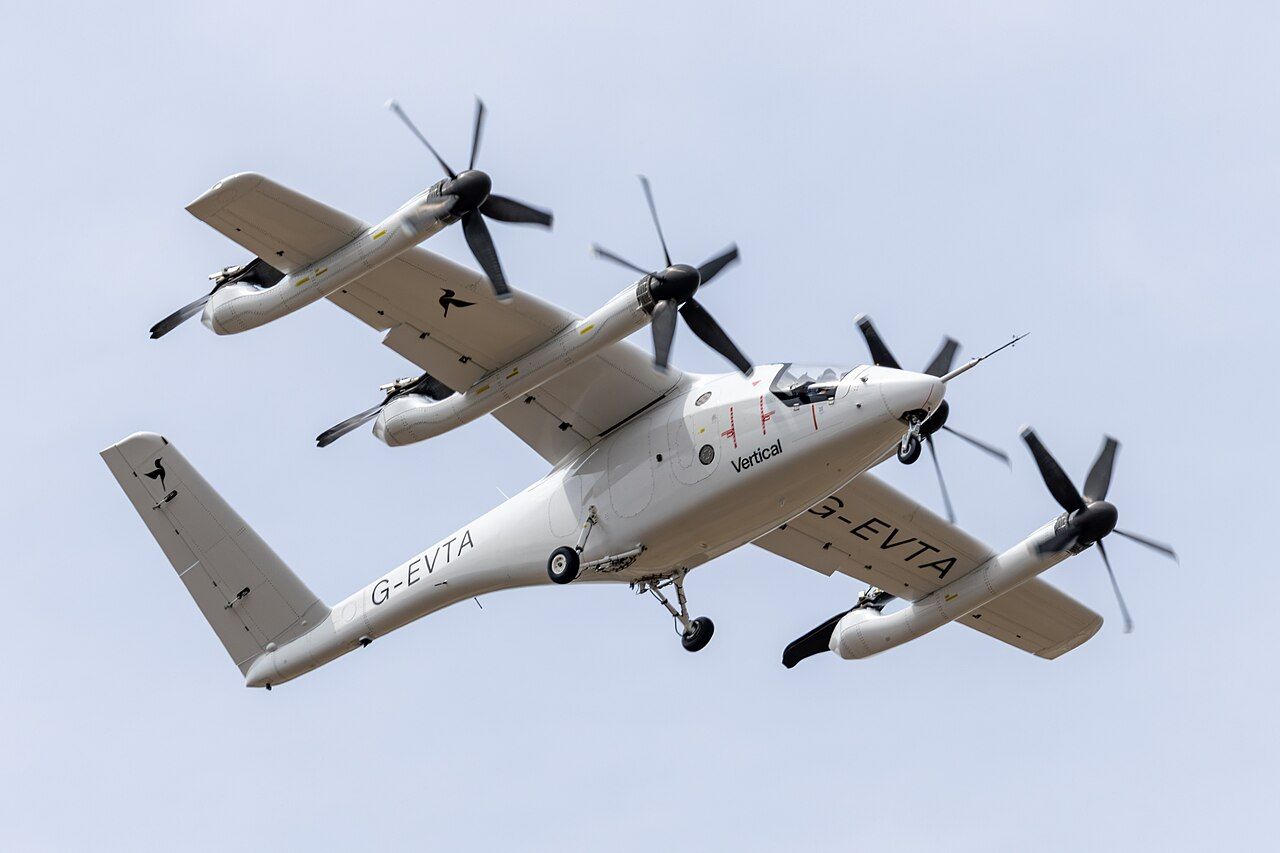
The VX4 prototype (G-EVTA) at the 2026 Farnborough International Airshow. Photo: Oren Rozen, CC BY-SA 4.0, via Wikimedia Commons
Joining a company that has not yet certified its aircraft is a different bet from joining Rolls-Royce or BAE. Before you accept an offer, check:
Cash runway. Twelve months of runway against a roughly $150 million annual outflow means the company will need more funding. Ask how long funding lasts and what happens if a round slips.
Schedule slips. The certification date has already moved once this year. Ask where the programme is against its critical design review.
One product. Everything depends on a single new aircraft type. Ask what you would work on if it is delayed again.
Where the work is heading. Vertical says the UK Ministry of Defence has confirmed interest in its hybrid-electric and autonomous capabilities, and it is retrofitting a prototype for hybrid flight in 2027. Defence work can bring security clearance requirements, so ask early.
The best protection is skills that travel: composites and structures, digital manufacturing, quality and certification work are all valued across aerospace if a particular programme stalls.
Build and document a project with real trade-offs, for example weight against cost. Show your numbers, not just the result.
Learn the certification language: SC-VTOL, Part 21, type certificates and type ratings. Few applicants can explain them.
Get comfortable with CAD, ideally CATIA, and with how a production line is laid out.
Apply to broader aerospace graduate schemes in the same cycle, so one company's timetable does not decide your year.
eVTOL is a genuine UK engineering opportunity, and the 2026 flight tests prove the aircraft can do what its makers say. It is also a high-risk employer category with a certification date that has slipped and a funding timeline of about a year. Treat it as one strong option alongside the established employers, not the only plan.
Subscribe to Crosswindcareers for weekly breakdowns of aviation, aerospace, and space careers. No commercial stake. No marketing. Just the information you actually need.

Aerospace engineering student at Kingston University London, on track for a First (89% in first year, 85% in second). In March 2026 our hybrid rocket engine, MAKAW 2, burned for 10 seconds at 130 N peak thrust, and I made its injector plate. I work in SolidWorks and ANSYS. Co-founded Crosswind to give people straight answers about getting into aviation and aerospace.

Honest aviation and aerospace career guidance for the next generation.